Our Farming Practices
Our Values: healthy soil, healthy water, healthy crops, healthy animals, healthy farmers, healthy community
We began a shift to a low-tillage/low disturbance approach farming in 2018, turning over a new leaf in regards to prioritizing soil health and biologically responsible farming practices. Additional steps we have taken toward regenerative farming practices include cessation of the use of anhydrous ammonia fertilizer in 2013, cessation of the use of insecticides in 2015, cessation of the use of fungicides 2016, and cessation of the use of seed treatments in 2017. We never use genetically modified crops, we never use Paraquat (Gramoxone), and our crops are all desiccant free. We only use herbicides as a pre-plant burn down and for occasional broad leaf weed control. We do not spray herbicides on crops that have past the stage in their development where they have begun to form seed heads.
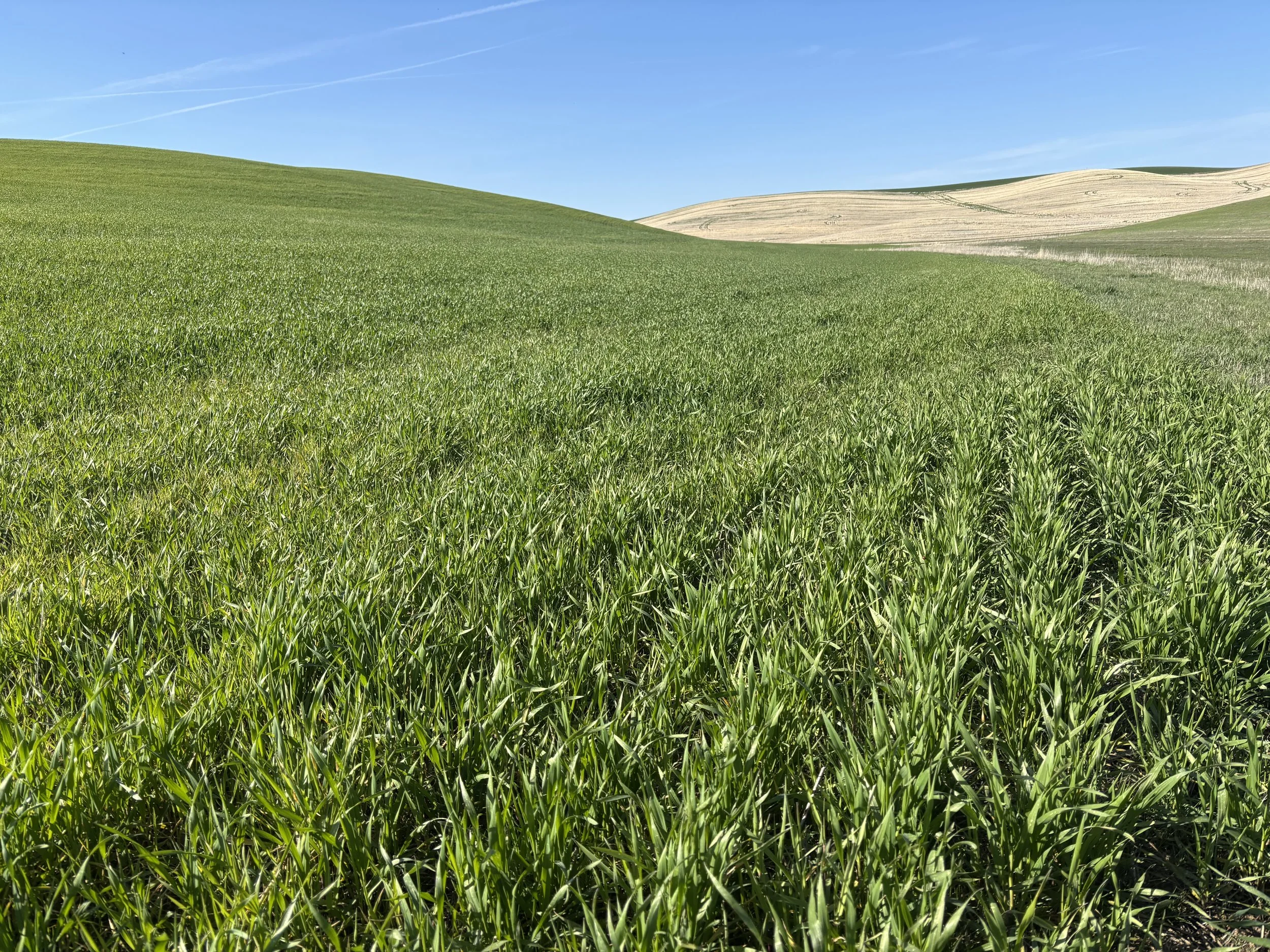
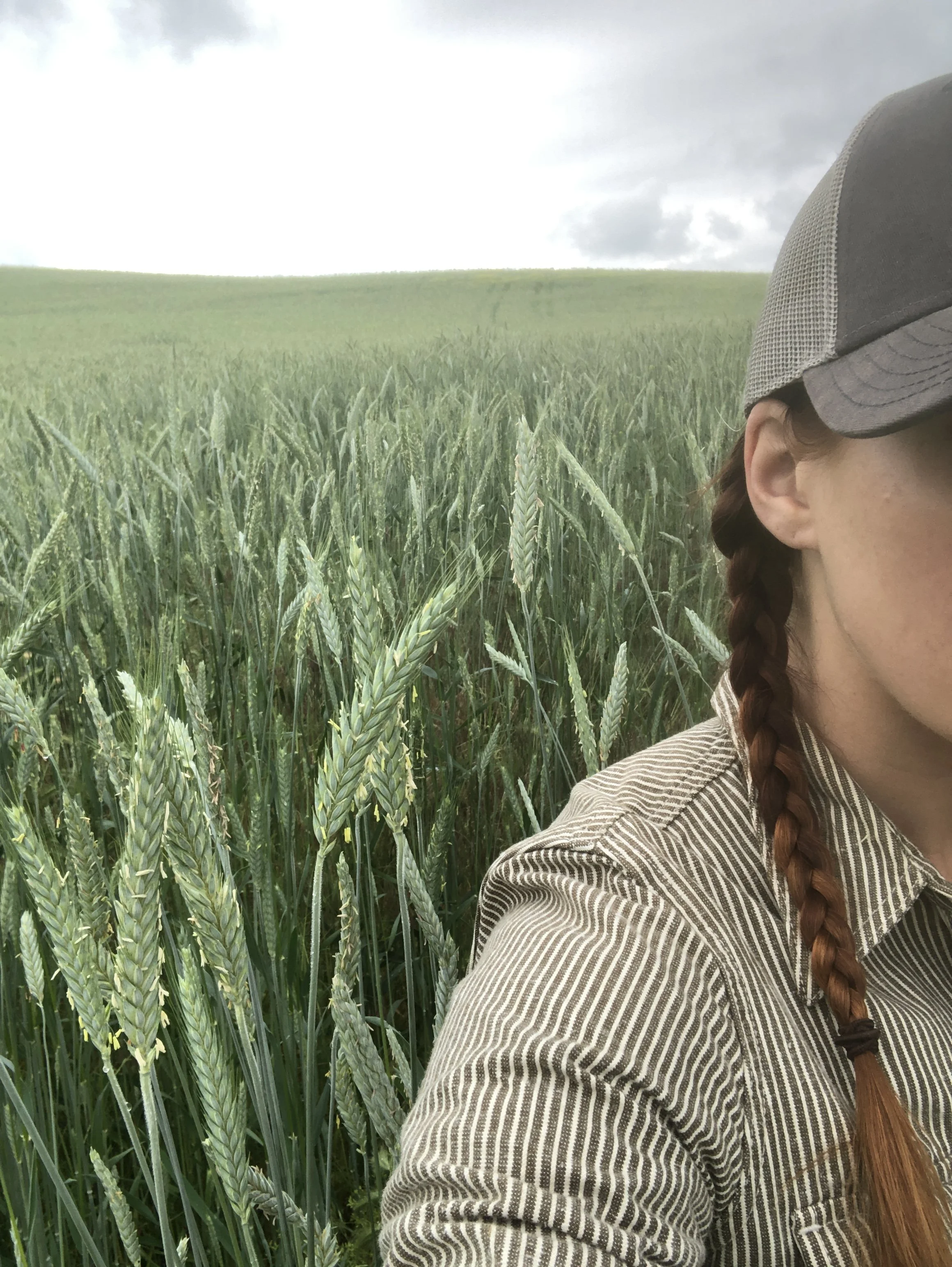
We began to incorporate cover crops into our rotation in 2015, and started to shift toward crops such as triticale (pictured right) that provide biomass and raise soil organic carbon levels while requiring a lower amount of synthetic inputs.
Whenever possible, we intercrop. A diversity of plants results in better soil health, and with this in mind we plant peas alongside oats and flax, triticale with peas, and red clover with our experimental perennial grain crops. Our cover crop mixes employ a diverse blend of forbs, legumes, and grains to feed beneficial insects and pollinators and to naturally assist in nitrogen fixation.
In the spring of 2026 we will be planting a buffer strip composed of native grasses and forbs along our border with highway 27. This buffer will offer habitat and food to beneficial insects and pollinators as well as prevent weeds spreading from hay trucks traveling down highway 27 into our fields.
Over the last two years, we have worked with the Palouse Conservation District to plant over 3,500 trees on the farm, and have plans to plant several hundred more over the next five years.
Images:
Top left and right: winter triticale
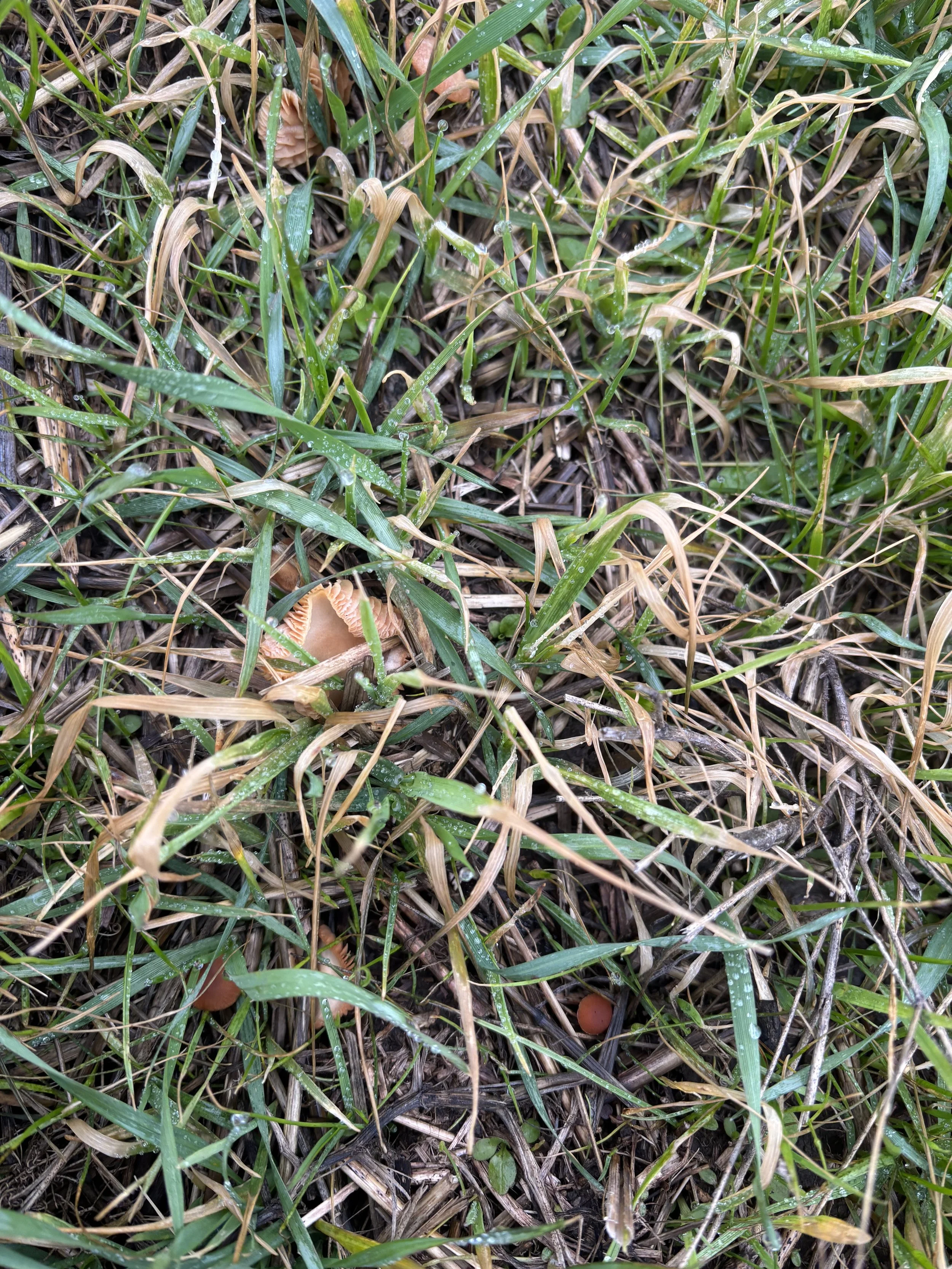
Lower left: mushrooms fruiting in our fields- we do not use fungicides or seed treatments which allow for the development of mycelial activity
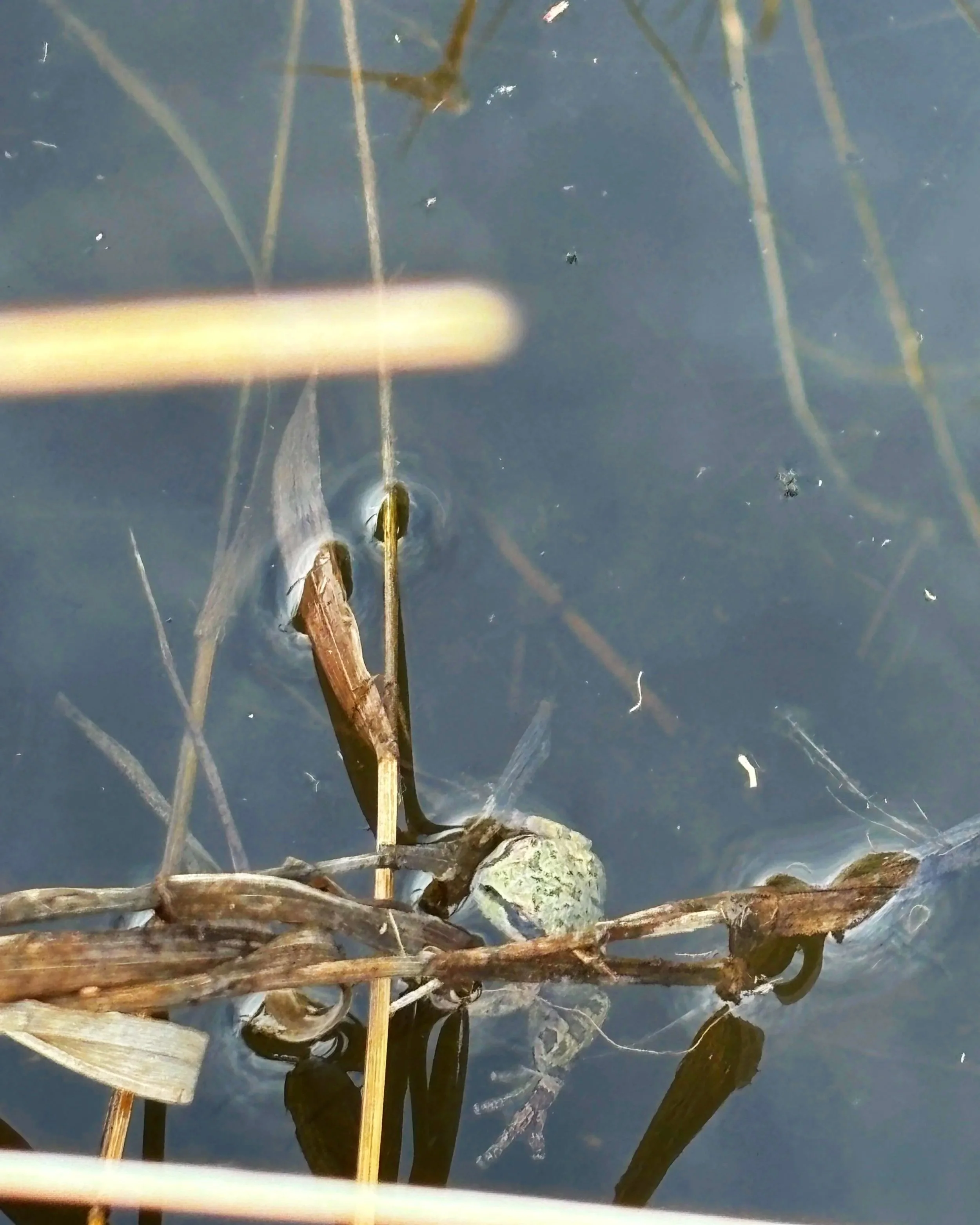
Lower right: we often find frogs in our fields and waterways, and we are trying our best to keep the water on our farm as clean as possible for them by avoiding excessive nitrogen and herbicide use